
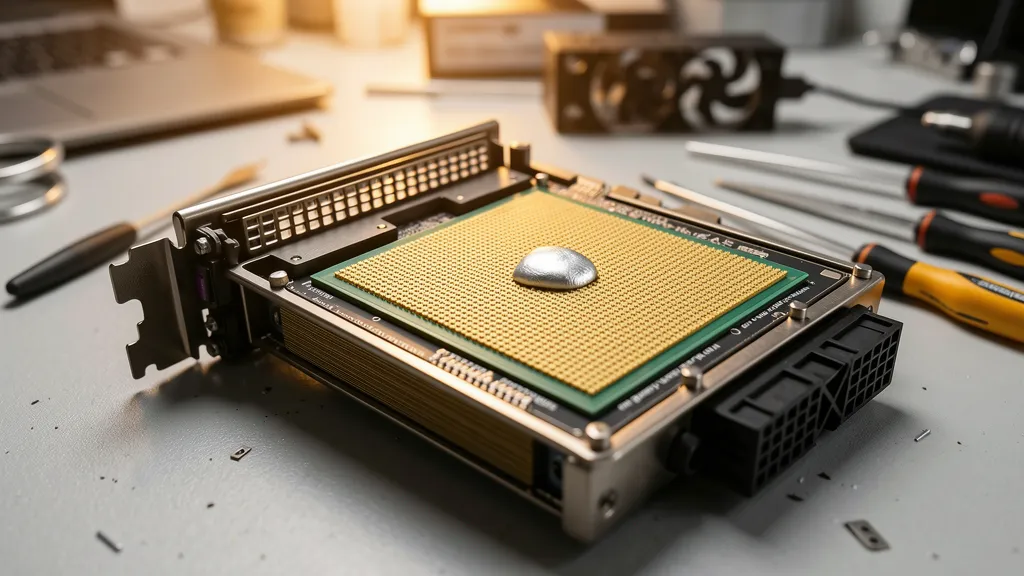
Your graphics card has been running fine for years — then suddenly temperatures are climbing, fans are screaming, and framerates are dropping mid-game. Before you blame the card itself, check the thermal paste. It’s one of the most overlooked maintenance items on a desktop GPU, and in Singapore’s climate it degrades faster than most people expect.
This guide covers exactly how often graphics card thermal paste needs replacing, what the warning signs look like, and what happens if you leave it too long.
Need it done now? BreakFixNow replaces GPU thermal paste on graphics cards from $40 — professional-grade compound as standard, high-performance compound available on request. Walk in to our Queen St outlet, no appointment needed. See our thermal paste service →
How Often Should You Replace Graphics Card Thermal Paste?
The general rule for GPU thermal paste replacement is every 3–5 years for a desktop graphics card under normal use. In Singapore, that window shortens — aim for every 2–3 years due to higher ambient temperatures and humidity accelerating paste degradation.
| Usage Type | Recommended Interval |
|---|---|
| Light use (browsing, office work) | Every 4–5 years |
| Regular gaming (several hours daily) | Every 2–3 years |
| Heavy workloads (3D rendering, AI, mining) | Every 1–2 years |
| Non-air-conditioned room in Singapore | Every 1–2 years |
| Overclocked graphics card running hot | Every 1–2 years |
These are guidelines, not hard rules — the actual condition of the paste matters more than the calendar. A graphics card running at 70°C under full load with two-year-old paste is fine. One hitting 95°C with one-year-old paste in a hot room is not.
Why Singapore Makes It Worse
Most thermal paste specs are written for 20–22°C ambient temperatures — typical for homes in Europe and North America. Singapore sits at 30–33°C year-round outdoors, and many rooms without air conditioning see indoor temperatures of 28–32°C constantly.
This matters because thermal paste degrades faster when it spends more time at high temperature. A graphics card that idles at 45°C in an air-conditioned room may idle at 60°C in a warm room — and under load the difference compounds. The paste is effectively running hotter for every hour the machine is on, accelerating the drying and cracking process.
Humidity plays a secondary role too — some paste formulations absorb moisture over time, slightly reducing their thermal conductivity. Singapore’s consistently high relative humidity is a stressor that paste in drier climates doesn’t face.
What Singapore Gamers Say (HardwareZone)
The HardwareZone Hardware Clinic forum is where local enthusiasts have been discussing GPU and graphics card repastes for years. Here’s what the community actually says:
“Anything under 20 degrees hotspot is fine. Ideally, it should sit closer to 15 degrees delta. Any other paste has a risk of deteriorating over time. Been there, done that.”
— elmariachi, HardwareZone Hardware Clinic (GPU Thermal Repaste thread, Sep 2024)
“5 years without a repaste may explain it. Normal lifecycle for thermal paste is 2–3 years. 5 years = the paste would’ve dried out by now.”
— HWZ forum member (Hardware Clinic thread, Nov 2018)
“When you consider to do a repaste on the GPU, also consider changing all the thermal pads. This will improve VRM and memory temperatures as well.”
— HWZ forum member (Thinking of repasting GPU thread, Aug 2025)
“For the thermal pad don’t scrimp for high-end GPUs, the memory really can run hot. It’s just a one-time thing, do it and forget it.”
— Phen8210, HardwareZone Hardware Clinic (GPU Thermal Repaste thread, Sep 2024)
Signs Your Graphics Card Thermal Paste Needs Replacing
- Graphics card temperatures are higher than they used to be. If your GPU ran at 70°C full load a year ago and now hits 85–90°C on the same game, paste degradation is a primary cause alongside dust buildup.
- Fans are louder or running at higher RPM than normal. The graphics card is working harder to shed heat — which usually means it isn’t shedding it efficiently anymore.
- Thermal throttling during gaming or rendering. Framerates drop suddenly under sustained load, the GPU clock drops well below its boost speed, or the system crashes under load.
- GPU hotspot temperatures are extremely high. A hotspot delta of more than 20°C above GPU temperature is a warning sign worth investigating.
- The graphics card is 3+ years old and has never been repasted. At this point it’s worth checking even without obvious symptoms.
What Happens If You Leave Degraded Paste Too Long
- Persistent thermal throttling. The GPU runs slower than it should under any sustained load.
- Accelerated fan wear. Fans running at 90–100% constantly wear out much faster than fans cycling at moderate speed.
- Higher operating temperatures stress other components. VRAM and VRM components also run hotter when the cooling system is compromised.
- In extreme cases, instability and crashes. A GPU running at 105°C+ will trigger emergency shutdowns or cause system instability.
⚠️ Note on GPU VRAM thermal pads: When replacing graphics card thermal paste, the thermal pads on VRAM chips and VRM components should also be inspected and replaced if they have hardened or cracked. Pad thickness varies by GPU model — using the wrong thickness is a common DIY mistake.
Graphics Card vs CPU Thermal Paste — Is It the Same Job?
The paste compound itself can be the same — a good non-conductive thermal compound works equally well on a CPU and a graphics card GPU die. But the job is more involved on a graphics card: GPU coolers attach with multiple screws in a specific torque sequence, VRAM and VRM thermal pads need to be replaced with the correct thickness, and large GPU dies require careful paste application technique.
What Type of Thermal Paste Should You Use on a Graphics Card?
For GPU and graphics card repastes, a non-conductive paste is the safest and most practical choice. It performs well on both CPU and graphics card dies, is safe if any paste squeezes out near components, and holds up reliably under Singapore’s heat. This is what BreakFixNow uses as standard across all GPU thermal paste services.
Liquid metal compounds are not suitable for graphics card applications. They migrate under pressure, are electrically conductive (creating a risk near VRAM and power components), and are not recommended for GPU die use.
Frequently Asked Questions
How often should I replace graphics card thermal paste in Singapore?
Every 2–3 years for regular gaming use. Every 1–2 years if you run heavy workloads, the GPU runs hot, or the room isn’t air-conditioned.
Do I need to replace GPU thermal paste if temperatures are normal?
Not necessarily. If your graphics card is hitting normal temperatures under full load, the paste is doing its job. Replace it when temperatures start climbing noticeably, or as preventive maintenance after 3+ years.
Can I replace graphics card thermal paste myself?
Yes, if you’re comfortable disassembling electronics carefully. The main risks are over-tightening cooler screws, using the wrong thermal pad thickness on VRAM, and applying too much or too little paste.
How much does GPU thermal paste replacement cost in Singapore?
At BreakFixNow, graphics card thermal paste replacement starts from $40 — this includes cleaning old paste, applying fresh compound, replacing VRAM thermal pads where needed, and a post-repair stress test.
Does replacing graphics card thermal paste void the warranty?
Opening a GPU to replace thermal paste typically voids the manufacturer warranty. For cards still under warranty, weigh whether the warranty coverage is worth more than addressing the thermal issue now.
How long does GPU thermal paste replacement take?
At BreakFixNow, graphics card thermal paste replacement typically takes 1–2 hours depending on the GPU model. We run a stress test after the service before handing the card back.
Graphics Card Running Hotter Than It Should?
👉 WhatsApp: +65 9750 4333
📍 62 Queen St, CYFL 04, Singapore 188541
✓ From $40 ✓ Professional-grade compound standard ✓ 90-Day Warranty